


Redruth Trail 1 - The Town Trail
Discover the stories locked up in the impressive architecture throughout the trail covering an impressive array of heritage buildings. The trail is mainly walked on pavements, and does have a number of steep hills. To the north of the town centre, you will see the new archive centre for Cornwall, Kresen Kernow on the former site of the Redruth Brewery Company.
Continue on the trail to Redruth’s oldest church St Euny. Christian worship probably began here in about 600 AD. The trail then turns back on itself leading you back to Redruth where you can stop for lunch in one of the pubs, numerous cafes, or purchase a traditional pasty from the local bakeries.
Address: Symons Terrace, Redruth TR15 1AA
Lat: N 50° 23′ 40.86″
Long: W -5° 22′ 92.17″
OS Grid Ref: SW 69809 42112
Distance: 3 miles
Terrain: Easy

Facilities available for this trail
Parking – parking in the car park.
Picnic areas – picnic in the Fair Field in Coach Lane.
Eating and shopping – a number of cafes and shops through the town.
Public houses – Miner’s Arms in Plain an Gwarry and Rose Cottage in Chapel St Redruth.
Accessibility
Family and children friendly – the route is very family friendly.
Cycle Trail – more of a trail for walking than cycling.
Horse Riding Trail – trail is not suitable.
Walking Trail – an easy trail to walk.
Disability access – suitable for small scooters.
Redruth Trail 1
- Created: 24th July 2017 12:44 pm
- Updated: 24th July 2017 3:38 pm
- Distance 3 miles
- Time 1 h 7 min
- Speed 2 mph
- Min altitude 295 ft
- Peak 440 ft
- Climb 299 ft
- Descent 295 ft
- Distance Instructions
Points of Interest
Trounson’s Store
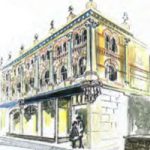 On the corner with Alma Place was Samuel & Tom Trouson’s migh class grocery store. Built for £2000 it’s ornate stone and brickwork is topped with carved pinnacles.
Location: SW 69931 42049
Mining Exchange
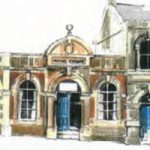 The proximity to the railway station attracted many dealers to this part of town. To the left is the Purser of Wheal Peevor’s office and to the right the former Bain & Field’s Bank.
Location: SW 69970 41938
The Old Fire Station
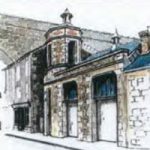 Built 1913 replacing a Bethseda Chapel the tower was used to drain the hoses.
Location: SW 69854 41832
Railway Viaduct
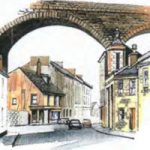 Built from Carn Marth, Carn Brea and Devon granite, its massive arches are 70 feet high. It replaced Brunel’s wooden viaduct of 1852.
Location: SW 69842 41836
Trewirgie House

Home of the founder of the London Missionary Society, Thomas Haweis (1734-1820).
Location: SW 69724 41601
Parish Church of St Euny
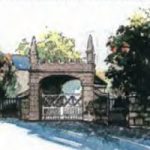 Under the 1810 lynch gate is a tragically long coffin rest, needed during outbreaks of cholera and mining accidents. The place has been a Christian site since the 6th-7th century.
Location: SW 69126 41231
The Chapel of Ease
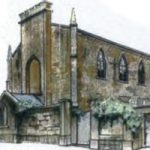 The Anglican Chapel of Ease completed 1828 was designed by Charles Hutchens along with the churches of St Day and Chasewater.
Location: SW 69735 42000
Chylowen and James Watt
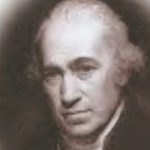 No 12 is Chylowen the house where James Watt (1736-1819) of Boulton and Watt engineers stayed when consulting with William Murdoch, their agent, on the erection of mine pumping engines in the 1870s.
Location: SW 69651 42459
Plain-an-gwarry
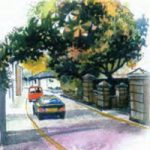 The Elms (1990-today) designed by Sampson Hill for Mr Tom Trounson. The area was possibly the site of the ancient Plain-an-gwarry – place of the play – or amphitheatre where miracle plays would be performed in the Cornish language up until the 17th century.
Location: SW 69777 42514

