


Redruth Trail 3 - St Euny Trail
This Trail leads you from the middle of town, down past the Tinner’s Hounds sculptures created, from the casts of miner’s boots. Cross Penryn Street, and head west out of town and onto the village of Carn Brea. Follow the trail, left onto part of the great Flat Lode Trail which will lead you to St Euny Church.
The church is at the heart of an important mining landscape, amid many impressive reminders of mines, stamps and engine houses all within a mile. St Euny’s memorials and gravestones reveal how mining changed the fortunes of Redruth people, and how mining also took Cornish people all over the world.
From the church, the trail takes you up to the abandoned engine houses of Wheal Uny mine, which in 1865 employed over 350 people and then head back down Trewirgie Hill into town.
Address: Symons Terrace, Redruth TR15 1AA
Lat: N 50° 23′ 40.86″
Long: W -5° 22′ 92.17″
OS Grid Ref: SW 69809 42112
Distance: 4 miles
Terrain: Moderate

Facilities available for this trail
Parking – parking in the car park.
Picnic areas – there are numerous appropriate places along the route to stop
Eating and shopping – stores and shops in the town centre.
Public houses – there are no pubs along the trail.
Accessibility
Family and children friendly – the route is family friendly.
Cycle Trail – good trail but some rough sections.
Horse Riding Trail – trail is suitable in some places.
Walking Trail – a moderate trail.
Disability access – suitable for large scooters.
Redruth Trail 3
- Created: 24th July 2017 12:38 pm
- Updated: 8th August 2017 1:08 pm
- Distance 4 miles
- Time 1 h 34 min
- Speed 2 mph
- Min altitude 338 ft
- Peak 558 ft
- Climb 499 ft
- Descent 502 ft
- Distance Instructions
Points of Interest
TROUNSON’S STORE
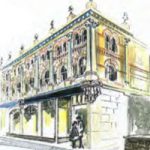 On the corner with Alma Place was Samuel & Tom Trouson’s high class grocery store. Built for £2000 it’s ornate stone and brickwork is topped with carved pinnacles.
Location: SW 69931 42049
MINING EXCHANGE
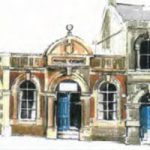 The proximity to the railway station attracted many dealers to this part of town. To the left is the Purser of Wheal Peevor’s office and to the right the former Bain & Field’s Bank.
Location: SW 69970 41938
RAILWAY VIADUCT
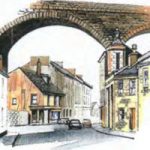 Built from Carn Marth, Carn Brea and Devon granite, its massive arches are 70 feet high. It replaced Brunel’s wooden viaduct of 1852.
Location: SW 69842 41836
THE OLD FIRE STATION
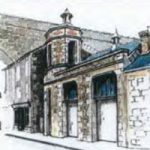 Built 1913 replacing a Bethseda Chapel the tower was used to drain the hoses.
Location: SW 69854 41832
TREWIRGIE HOUSE
 Home of the founder of the London Missionary Society, Thomas Haweis (1734-1820).
Location: SW 69724 41601
PARISH CHURCH OF ST EUNY
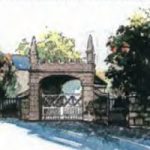 Under the 1810 lynch gate is a tragically long coffin rest, needed during outbreaks of cholera and mining accidents. The place has been a Christian site since the 6th-7th century.
Location: SW 69126 41231
CARN BREA CASTLE AND MONUMENT
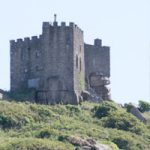 Private property. Allegedly dates from Norman times and was used as a hunting lodge by the Bassets for the deer park.
The monument is 90ft/27.5m high and 738ft/225m above sea level, it is inscribed ‘The County of Cornwall to the memory of Francis Lord de Dunstanville and Basset A.D. 1836’.
Location: SW 686 4085
THE CHAPEL OF EASE
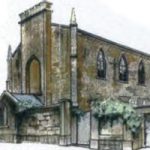 The Anglican Chapel of Ease completed 1828 was designed by Charles Hutchens along with the churches of St Day and Chasewater.
Location: SW 69735 42000
Redruth Drapery
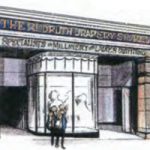 After the original store of 1916 was destroyed by fire in 1987 the Carthew pink façade was sympathetically retained it’s rebuilding in 2000.
Location: SW 69715 41964

